Cardano’s Hoskinson Clashes With Clarity Act and Explains How Midnight Fixes Crypto Privacy
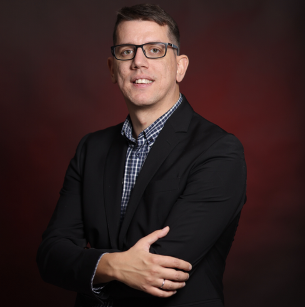
Charles Hoskinson, co‑founder of Ethereum, Cardano, and the Midnight Network, sat down with Ashton Addison on The Crypto Coin Show. He discussed why he keeps building through market cycles, what’s wrong with the Clarity Act, and how Midnight fixes crypto’s missing piece: privacy.
Hoskinson made it clear he is not building for money. “If you’ve been in round dollar Bitcoin and you’re still here, you can’t be here for the money. You’re here for philosophy.” His philosophy: finish Satoshi’s vision of a decentralized global financial operating system. And that requires privacy.
Hoskinson’s Critique of the Clarity Act
Hoskinson pulled no punches on the Clarity Act. He argued that the legislative process was flawed from the start. “Nobody knew what they were doing. There was no leadership from the crypto czar. He’d never done legislation before.” Hoskinson has passed laws in Wyoming (including the Stem Cell Freedom Act) and knows the prep work required: months of bringing both parties together, consulting the industry, and building consensus. None of that happened with the Clarity Act.
Worse, Democrats were excluded from the process. “If the Democrats are excluded, they have no incentive to support the bill.” The result is a conflation of layers – statutory, rulemaking, and industry – all being figured out in real time. Hoskinson also pointed out that the bill ignores the global nature of crypto. “CZ, a Chinese guy living in Abu Dhabi, has more to say about American crypto business than any American. We’re going to regulate American industry but forget we live in a global world.”
Related analysis: 3 Altcoins That Could Crash If the Bill Dies (Including ADA)
The core problem, he said, is that the 1933 Securities Exchange Act is unamendable. “We can’t change the definition of a security. It’s 93 years old.” He called for an update that recognizes decentralized digital securities and allows zero‑knowledge disclosures through rulemaking, not statute‑prescribed technology.
How Midnight Fixes Crypto Privacy
Hoskinson explained that most blockchains lack privacy. “Every single thing you do in crypto is recorded and can be used against you later.” Midnight was built from first principles to provide programmable privacy – selective disclosure using zero‑knowledge proofs. “You can prove you’re not a US user without revealing whether you’re German or French.”
He gave vivid examples: a dating app (Tinder) where you verify someone is real without sharing private data; a conference networking tool where investors prove they are accredited and only meet relevant founders; a bug bounty marketplace where white hats can prove they have a zero‑day exploit without revealing the exploit itself. “These use cases have nothing to do with Ethereum or Solana. They transcend the chain.”
Midnight is designed as a multi‑chain proof layer. It works with Bitcoin, Cardano, Ethereum, and Solana. Its Midnight Passport abstracts away the underlying chain, letting users pay fees in any asset (stablecoins, ETH, ADA) through a dual‑token model (Dust). The goal is a “Wi‑Fi moment” where everything just works.
Midnight’s Vision for AI Agents and the Multi‑Chain Future
Hoskinson predicted that by 2035, the majority of internet activity – searches, commerce, advertising – will be done by AI agents, not humans. “Agents speak proofs, not English.” Midnight is a giant proof machine, giving agents a language to prove authority and follow rules. “The more you share with agents, the better they do, but the more whoever runs the agent knows about you. You need guardrails. That’s blockchain.”
He also addressed stablecoins: “The Genius Act created rules of the road – stablecoins are here to stay.” But without the Clarity Act, there are no arcade games to put the tokens into. He supports the Clarity Act’s intent but wants the process fixed. “The crux is compliance. Legacy people want to ban non‑custodial wallets and centralize DeFi. There’s got to be a middle ground, and that’s where ZK proofs fit.”
Why Hoskinson Keeps Building
Despite market conditions, Hoskinson remains focused. “The job is not done. We need a resilient, decentralized financial operating system. We’re missing privacy.” Midnight is his last major project before retirement. “Cardano took 10 years. I might be here for quite some time, but Midnight is the most important thing because it makes everything real. It’s what will onboard billions of people.”
He praised cross‑chain collaboration: “The industry agrees we need a Wi‑Fi moment – a standard where everything just works.” Midnight is designed to unify privacy across individuals, companies, and governments, using a single family of technology. “Investments by Fortune 500 and governments percolate down to the end user – just like NSA’s work on Linux made it stronger for everyone.”
Charles Hoskinson laid out a clear critique of the Clarity Act’s flawed process and a compelling vision for Midnight as the missing privacy layer for all of crypto. With programmable zero‑knowledge proofs, multi‑chain abstraction, and a future‑proof design for AI agents, Midnight aims to finish what Satoshi started.
Frequently Asked Questions
1. What is Midnight in crypto?
Midnight is a privacy‑focused blockchain that uses zero‑knowledge proofs to provide selective disclosure. It is designed to work with multiple chains (Bitcoin, Ethereum, Solana, Cardano) and abstracts away the underlying network through the Midnight Passport.
2. What is Hoskinson’s problem with the Clarity Act?
He says the bill excluded Democrats, ignored global realities, and failed to update the 93‑year‑old definition of a security. He wants a modernized framework that allows zero‑knowledge compliance and recognizes decentralized digital securities.
3. Will Clarity Act pass in 2026?
The answer is still very much up in the air. While a final version of the CLARITY Act is nearing completion, with key disputes on stablecoin rewards being resolved and President Trump ready to sign it, the timeline is slipping, and the outcome is far from certain. Senator Tim Scott's committee markup has been delayed from late April to sometime in May, leading analysts and prediction markets to place the odds of the bill passing in 2026 at roughly 50-50, with some estimates as low as 30% and others in the mid-40s.
Related Articles
South Korea's internet‑only bank KBank has entered a strategic partnership with Ripple to test on‑chain cross‑border rem
Bitcoin hit $79K then reversed. LDO leads altcoin gains on buyback and DeFi rescue news. Bitcoin ETFs saw $824M weekly i
LDO is the top gainer among the top 100 cryptocurrencies on April 27, up heavily from $0.36 to nearly $0.47. Two catalys
Pi Coin pumps 5% to $0.18 on wallet migration clarification and Consensus 2026 news. Litecoin reorg reverses invalid MWE